How to Invest in Claude AI (Anthropic): The 2026 Guide
How to Invest in Claude AI (Anthropic): The 2026 Guide
It stated that you had to wait because Anthropic was a private firm that had raised several billion dollars. That version is no longer relevant.
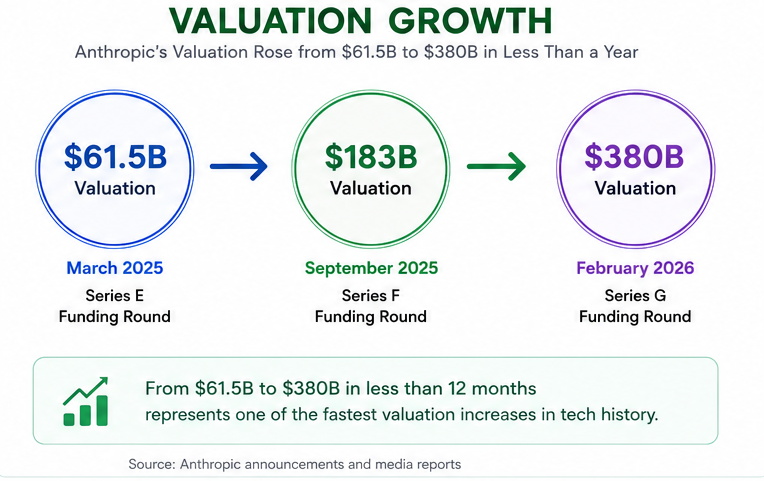
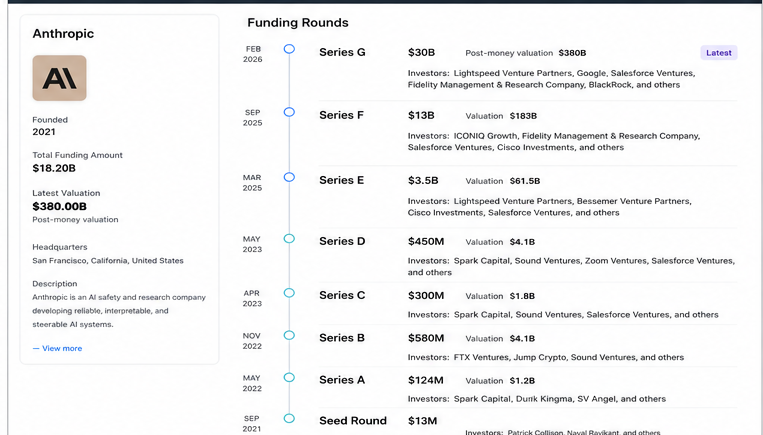
As of right now, Anthropic raised $3.5 billion in March 2025 at a valuation of $61.5 billion and closed a $13 billion Series F in September 2025 with a valuation of $183 billion. and completed a $30 billion Series G in February 2026 with a post-money valuation of $380 billion. That valuation rose from $61 billion to $380 billion in less than a year.
As Anthropic gets ready for an initial public offering (IPO) that may raise over $60 billion as early as October 2026, investment banks like Goldman Sachs, JPMorgan Chase, and Morgan Stanley are competing for underwriting roles.
Suppose you’re interested in investing in the company behind Claude, the window before a public listing is narrowing. This guide explains your actual options, direct and indirect, and what any investor should understand before committing capital.
Why Anthropic’s Growth Numbers Matter
Before discussing how to invest, you need to understand what you’d actually be investing in. The growth story here is unusual even by AI standards.
At the beginning of 2025, less than two years after launch, Anthropic’s run-rate revenue had grown to approximately $1 billion. By August 2025, just eight months later, the run-rate revenue reached over $5 billion, making Anthropic one of the fastest-growing technology companies in history.
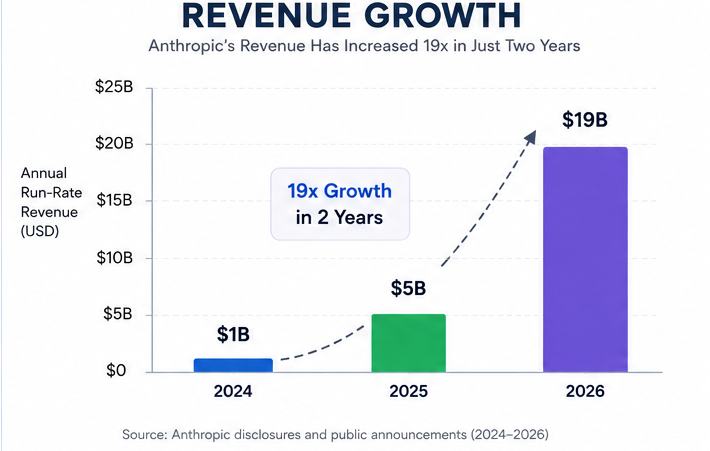
That was not the end of it. Anthropic’s yearly income increased from $9 billion at the end of 2025 to over $19 billion as of March 2026. For three years in a row, the company’s revenue has increased by more than ten times a year.
The run-rate revenue is $14 billion as of early 2026, with this figure growing over 10x annually in each of those past three years, driven by Anthropic’s position as the intelligence platform of choice for enterprises and developers. The number of customers spending over $100,000 annually on Claude has grown 7x in the past year.
For context, Salesforce took 20 years to reach similar annual revenue levels.
This is what makes the investment thesis compelling. It’s not hype. It’s one of the fastest revenue ramps in enterprise software history, happening in a market that shows no signs of decelerating.
The Direct Investment Question (Still Private, But Not for Long)
Anthropic is not publicly listed. You cannot buy Claude AI stock today in the way you’d buy shares of Apple or Microsoft. That’s the honest starting point.
But the situation is changing materially. Anthropic has hired the law firm Wilson Sonsini to prepare for an initial public offering that could take place as early as 2026. The company would have a more effective means of raising money through an IPO, which would also create leverage for larger acquisitions through public stock.
Despite not formally disclosing its plans for an IPO, Anthropic appears to be taking activities that could put the business in a position to go public sometime in 2026, though it may take longer. Anthropic has not yet decided if or when to go public, according to an Anthropic spokesman.
What does that mean practically? Don’t build your strategy around a guaranteed IPO date. But don’t ignore the signals either. The preparations are real, the investment banks are circling, and employees retaining shares at the $350 billion tender offer valuation were effectively betting that the IPO would price even higher. Insiders who know the business best chose not to sell.

Who Has Already Invested and What That Tells You
Understanding Anthropic’s cap table is itself an investment lesson. The companies that got in early reveal where the strategic value sits.
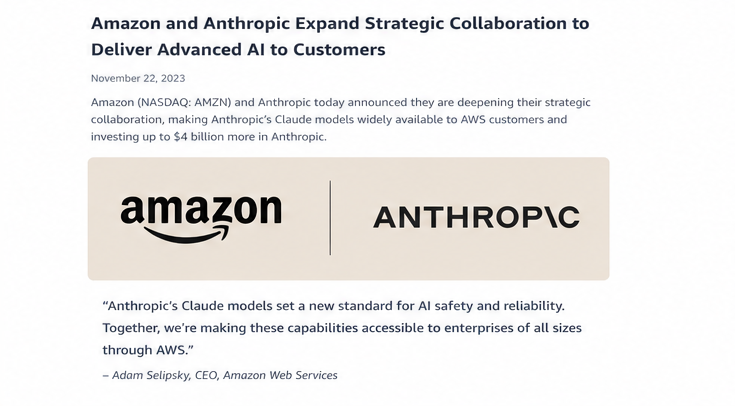
Amazon has invested $8 billion total across multiple tranches. As part of the arrangement, Anthropic uses AWS as its primary cloud provider and makes Claude available to AWS customers. This is a classic infrastructure bet. Amazon isn’t just holding equity; it’s embedding Claude into the cloud platform used by millions of enterprises.
Google (Alphabet) committed to investing $1.5 billion over time, starting with a $500 million investment. Anthropic and Google announced a cloud collaboration in October 2025 that would grant Anthropic access to up to one million of Google’s proprietary Tensor Processing Units (TPUs). By 2026, more than one gigawatt of AI computing capacity will be online thanks to the collaboration, according to Anthropic.
By late 2025, Microsoft and NVIDIA want to invest a total of up to $15 billion. Additionally, Anthropic has committed to investing $30 billion in NVIDIA-powered processing power from Microsoft Azure.
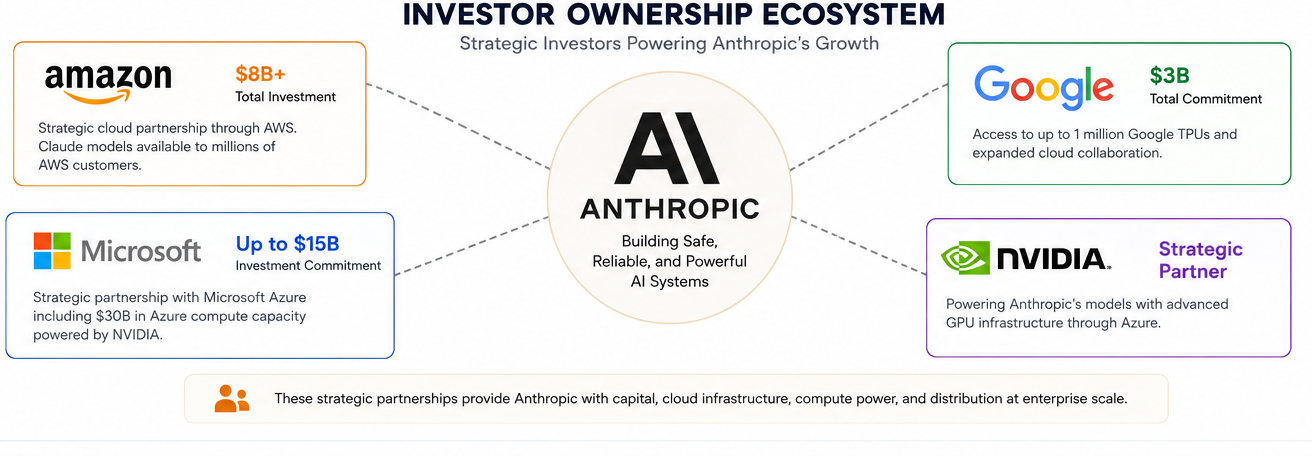
The pattern here matters: every major cloud and chip infrastructure player has taken a strategic stake. They’re not just investors; they’re customers, suppliers, and distribution partners simultaneously. That kind of structural entrenchment is what long-term investors look for.
Your Actual Investment Options Today
1. KraneShares AGIX ETF (The Most Direct Public Route)
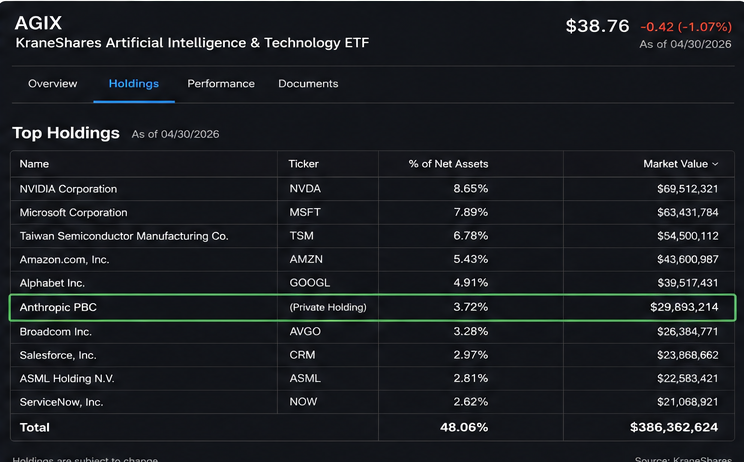
This is the option most investment guides miss entirely because it’s relatively new. The KraneShares Artificial Intelligence & Technology ETF (ticker: AGIX) is currently the only publicly listed ETF with direct ownership exposure to Anthropic. AGIX established its Anthropic position in early 2025. By year-end, the position had appreciated to an estimated fair value that was fourfold its initial cost.
AGIX provides access to Anthropic through a daily-liquid, NAV-based ETF, available via standard brokerage accounts without private-market lockups, capital calls, or accreditation requirements.
This is the meaningful difference between AGIX and generic “AI ETFs” like BOTZ or ARKQ. Those funds hold AI-adjacent companies like NVIDIA, Tesla, and UiPath, companies that benefit from AI adoption broadly but have no direct Anthropic exposure. If your goal is exposure to Claude’s parent company specifically, AGIX is the only publicly available vehicle that actually delivers it.
2. Amazon (AMZN) (The Largest Single Stakeholder)
Amazon has committed $8 billion to Anthropic, making it by far the largest outside investor. Buying Amazon stock gives you indirect exposure to Anthropic’s upside, plus the underlying AWS business that also benefits from Claude’s enterprise adoption. This is the lowest-risk, most liquid path for someone who wants some Anthropic exposure without concentrated private-market risk.
3. Alphabet (GOOGL) (Strategic Partnership Exposure)
Google’s $3 billion investment is smaller in dollar terms but strategically significant. Claude is integrated into Google Cloud, one of Anthropic’s primary distribution channels. Alphabet shareholders benefit both from Google’s equity stake and from the commercial relationship between the two companies.
4. Pre-IPO Secondary Market Shares
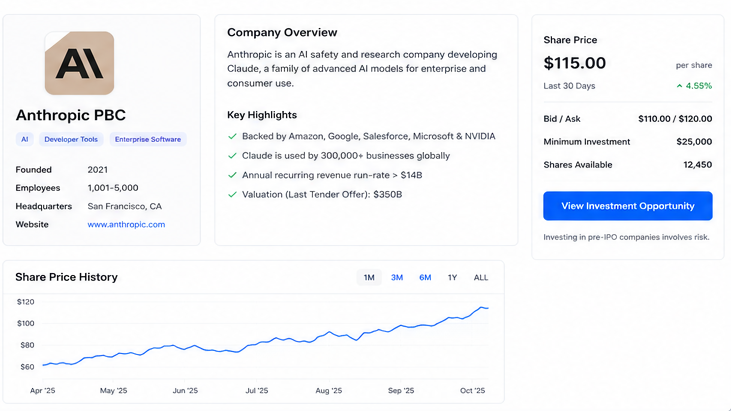
Platforms like Forge Global and EquityZen facilitate trading of pre-IPO shares in private companies, including Anthropic. This is real equity exposure, but it comes with serious caveats that most articles gloss over.
Private shares are illiquid. You cannot sell them freely until after a public listing and the expiration of lock-up periods. Pricing on secondary markets is less transparent than public markets. Minimum investment amounts are typically high. And if the IPO is delayed or priced below secondary market levels, you’re exposed to downside with no easy exit.
This path is appropriate for accredited investors with long time horizons who understand they may be holding these shares for 18–24 months or more.
5. Venture Capital Funds
Through their fund portfolios, Menlo Ventures, Sequoia Capital, and a number of other companies have direct exposure to anthropology. Long lockups, minimum commitments of $250,000, and accreditation are all prerequisites for investing in venture capital funds. Although this is not a retail alternative, institutional or high-net-worth investors assessing the market should be aware of it.

The IPO: What Investors Should Actually Watch For
Anthropic is targeting an October 2026 Nasdaq listing with Goldman Sachs and JPMorgan as lead banks. The raise is expected to exceed $60 billion at a $400–500 billion valuation.
Before getting excited about day-one returns, there are structural factors that matter.
Anthropic generates $0.23 in ARR per dollar raised, compared to OpenAI at $0.11. That capital efficiency ratio is a key metric institutional investors will scrutinize. It suggests Anthropic is deploying capital into real revenue more effectively than its closest competitor.
Anthropic intends to spend about $19 billion on model training and inference infrastructure in 2026, about matching its revenue, but it is not yet profitable. After inference costs increased 23% above forecasts in 2025, gross margins are roughly 40%. The business anticipates $17 billion in cash flow by 2028 and positive free cash flow by 2027.
Any investor must contend with this conflict between exceptional capital spending and exceptional top-line growth. Anthropic is betting on a market that rewards speed and scale by spending all of its earnings and more. This is not out of the ordinary for AI infrastructure firms at this point, but it does suggest that profitability is still a 2027–2028 story rather than a 2026 one.
Another structural aspect that is simple to ignore is Anthropic’s Public Benefit Corporation (PBC) structure, which grants the board the legal right to put safety ahead of shareholder rewards. Before making an investment, investors who are used to management teams prioritizing earnings per share should carefully read this.
The Real Investment Case for Anthropic
Strip away the financial mechanics, and the core question becomes: is Anthropic building something defensible?
The enterprise adoption numbers suggest yes. Among Anthropic’s customers are eight Fortune 10 firms, and CEO Dario Amodei has said enterprises account for roughly 80% of revenue. Predictable enterprise demand gives Anthropic a more stable revenue base than consumer-facing AI competitors dependent on subscription volume.
Anthropic now has more than 300,000 business customers, up nearly 7x in the past year. And Claude Code alone. Anthropic’s coding assistant that moved from research preview to general availability in May 2025. It was already generating over $500 million in run-rate revenue, with usage growing more than 10x in just three months.
The safety-first positioning that some see as a constraint is, from an investment perspective, a long-term asset. Enterprise clients, government agencies, and regulated industries are not buying AI on raw benchmark performance alone; they’re buying it on trust, compliance readiness, and accountability. Those are exactly the qualities Anthropic has systematically built, and they’re much harder to copy than a benchmark score.
What Smart Investors Are Doing Right Now
The investors who benefit most from an IPO are typically those who positioned themselves before the S-1 filing, not after the first day of trading, when excitement drives up the price. The preparation window is the one we’re currently in.
That doesn’t mean rushing into pre-IPO shares with money you can’t afford to lock up. It means understanding the landscape, identifying the vehicle that matches your risk tolerance and liquidity needs, and making a deliberate decision rather than a reactive one when the IPO finally opens.
For most people, that means AGIX for direct-ish exposure today, AMZN and GOOGL for indirect exposure with full liquidity, and patience for the IPO when it arrives.
The Anthropic story is one of the most remarkable in technology, a company that went from $1 billion in revenue to $19 billion in 15 months, backed by every major cloud provider, preparing to go public at a valuation that would rank among the largest tech listings in history. That story is already being told. The question is whether you’re positioned to participate in the next chapter.
For updates, visit Claude AI news and guides. With informed decisions, investors can capture the opportunities Claude AI provides.
FAQs
Q1: Can I invest directly in Claude AI?
Currently, direct investment in Claude AI is unavailable because Anthropic remains a private company. Investors must rely on indirect methods such as AI-focused ETFs, pre-IPO shares, or cloud partner stocks to gain exposure to its growth and ecosystem.
Q2: Which ETFs provide Claude AI exposure?
Indirect exposure to Claude AI is possible through AI-focused ETFs like BOTZ, ARKQ, and IRBO. These ETFs hold companies and cloud partners connected to Claude AI. They are offering diversified investment opportunities while reducing the risks associated with single-company pre-IPO shares.
Q3: What are pre-IPO investment risks?
Pre-IPO investments can be quite unpredictable because private stock prices often swing. Many variables influence the valuation of a company, including its market trends, performance, and investor sentiment. It is possible to hedge your investments against risks associated with investing in one type of ETF by diversifying into several! The inclusion of stable or consistent ETF partners will further offset your investments’ overall risk.
Q4: How can I track Anthropic’s growth?
Investors can track Anthropic’s growth by setting up Google Alerts. Follow news about its partnerships and potential IPOs. Stay updated with industry publications. Being informed helps you adjust your investments. You can respond quickly as the company evolves and opportunities arise.
Q5: Is Claude AI safer than competitors?
Claude AI puts ethics first, building trust with enterprise clients and meeting strict regulatory standards. This safety-focused approach sets it apart from competitors. For investors, this strong reputation creates promising opportunities through indirect investment options, offering both growth and reliability.